5 Tips to Achieve the Perfect Exposure in Photography
Achieving the perfect exposure in photography can seem elusive, but with the right approach and a few key techniques, you can consistently capture well-exposed images. Exposure refers to how much light is captured by your camera’s sensor, and getting it just right can make all the difference in creating impactful photos. Here are five practical tips to help you achieve perfect exposure every time.
1. Master the Histogram
The histogram is one of the most useful tools for evaluating exposure. It visually represents the distribution of light in your image, from black on the left to white on the right, with midtones in the center. By reviewing the histogram, you can ensure that your exposure isn’t too dark (underexposed) or too bright (overexposed). On most cameras, you can access the histogram during playback, and with mirrorless cameras, you can even view it live before capturing the shot. Learning to interpret this graph will greatly improve your ability to manage exposure in various lighting conditions.
2. Enable Clipping Warnings
Clipping warnings, also known as “blinkies,” alert you to overexposed areas where detail is lost. These warnings typically appear as flashing highlights in your camera’s display. If the highlighted areas are crucial to your shot, you’ll need to adjust your exposure to preserve detail. For instance, dialing down the exposure using manual mode or exposure compensation can help recover those details. However, if the clipped areas are not important, like the bright sky or distant background, you may choose to leave them as is. These warnings are a helpful guide, but the final decision is yours as a photographer.
3. Choose the Right Shooting Mode
While manual mode is often recommended for photographers, it’s not always the best choice for every situation. Sometimes, using the appropriate shooting mode can make a significant difference in how quickly you can adjust to changing conditions. For example, use Aperture Priority when photographing handheld or in varying light conditions, and Shutter Priority for capturing fast-moving subjects. For longer exposures or night photography, Manual Mode is ideal. The key is to select the mode that best suits your scene and experience level, so you’re not overwhelmed with constant adjustments.
4. Understand Metering Modes
Your camera’s metering mode is crucial for measuring light in a scene. There are typically several metering modes to choose from:
- Matrix/evaluative metering: Measures the entire scene to provide a balanced exposure. This is great for most situations and is often the default setting.
- Center-weighted metering: Focuses more on the center of the frame, making it useful for backlit subjects.
- Spot metering: Measures a small part of the frame, usually the area where the camera is focused. This can be tricky for beginners and may result in inconsistent exposures.
Selecting the appropriate metering mode based on the scene will help ensure a well-exposed image, especially in challenging lighting conditions.
5. Use Exposure Compensation
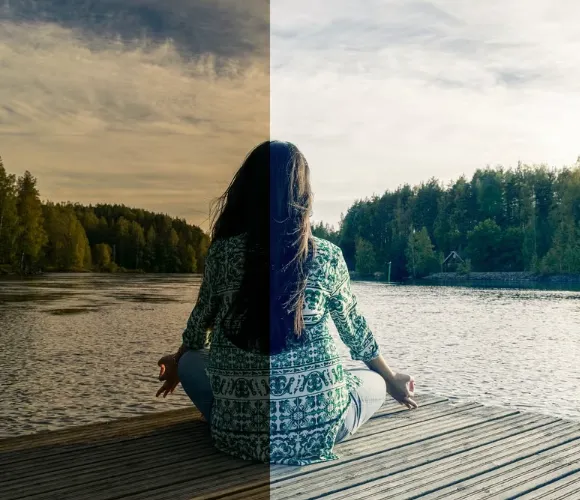
When working with semi-automatic modes like Aperture or Shutter Priority, exposure compensation allows you to fine-tune your exposure without switching to manual mode. If your image appears too dark, you can use positive compensation to lighten it; if it’s too bright, dial it down with negative compensation. Pay attention to the histogram and clipping warnings as you make these adjustments to fine-tune the exposure and ensure you’re capturing the image exactly as you envision it.
Conclusion
Perfect exposure is not a one-size-fits-all concept; it’s subjective and depends on the scene, the message you want to convey, and your creative vision. By understanding the tools and techniques mentioned above, you can take control of your exposure and create images that truly capture the essence of what you see. Whether you’re adjusting your settings, using the histogram, or making small tweaks with exposure compensation, mastering exposure is essential for improving your photography.