10 Powerful Composition Challenges to Improve Your Photography
One of the most crucial aspects of photography is mastering composition. While you can read articles and watch tutorials, the true challenge lies in applying what you’ve learned in real-life situations. To make sure you retain and practice the concepts, setting yourself composition challenges is a great way to refine your skills. Here are 10 composition challenges to help you deepen your understanding and get out of your comfort zone.
1. Capture the Essence of a Place (Travel Space)
When you’re traveling, it can be tempting to photograph only well-known landmarks or popular Instagram spots. However, some of the most impactful photos come from places that speak to you personally. For this assignment, focus on how people interact with spaces. Consider how much surrounding area should be included, and experiment with leaving spaces empty to convey a sense of solitude or emptiness.
For example, when photographing a remote house in the Falkland Islands, I focused on the bleak weather, the utilitarian buildings, and the sparse landscape. By leaving space around the house, I created a sense of isolation and highlighted the mood of the environment.
2. Play with Light and Shadow (Architectural Light)
Buildings come to life when bathed in sunlight, offering rich textures and dramatic contrasts. For this challenge, choose a building partially lit by the sun and partially in shadow. Observe how the light changes the shapes and form of the structure. Whether you’re shooting at noon with high overhead light or during the softer golden hours, explore how different lighting conditions transform your subject. Don’t be afraid to move around and experiment to find the most dynamic composition.
3. Explore Single Colors (Shades of Green)
Focus on a single color in a composition and discover the variety of shades within it. A great starting point is shooting in environments full of that color, like forests or gardens. Shoot during different lighting conditions, such as overcast days or when it’s raining, to see how the color changes. Using a polarizer can help enhance the natural tones by eliminating unwanted reflections from leaves and surfaces.
4. Work with Contrasting Colors (Red and Green)
Red and green are complementary colors, meaning they sit opposite each other on the color wheel. Look for ways to incorporate these contrasting colors into your photos. Whether in nature or the built environment, these colors often appear together. You can capture red flowers against green foliage or architectural scenes featuring red and green elements. Try to create a set of images that ties these two colors together, whether through natural landscapes or urban settings.
5. Convey Mood Through Landscapes (Lonely Landscape)
Instead of going for typical picturesque landscapes, challenge yourself to capture a more desolate, isolated scene. Look for vast, empty spaces with minimal human presence. Use the color blue, which evokes feelings of solitude and melancholy, particularly during the blue hour, to emphasize the emotional impact of your image.
6. Capture Texture in Black and White (Statues)
For this challenge, focus on a subject with rich textures, like statues, and explore its form in black and white. High contrast and texture are key elements for striking black-and-white images. Use strong light to bring out the textures in the statue’s surface, and consider shooting close-ups or focusing on just one part of the statue to create a compelling composition.
7. Use Diagonal Lines to Lead the Eye (Zippy Diagonals)
Diagonals are dynamic lines that can guide the viewer’s eye through the frame. Look for natural or man-made lines—such as roads, buildings, or even objects like incense sticks—that create a diagonal path in your composition. Diagonals add movement and depth, so find a scene where these lines can help add visual interest and lead the viewer’s gaze to different parts of the image.
8. Create Contrast Between Sharp Subjects and Blurred Backgrounds (Balance)
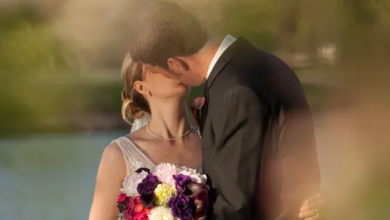
A sharp subject with a blurred background is a classic technique, particularly for portraits. To perfect this, use a wide aperture to create a shallow depth of field and choose a subject that stands out. Think about how the balance between subject and background can impact the composition. Does the viewer’s eye move naturally between the two, or does one dominate the image?
9. Divide the Frame (A Sense of Depth)
One effective technique in landscape photography is to mentally divide the frame into three sections: foreground, middle ground, and background. This approach can create depth in your photos. While composing, think about how much of the scene should be allocated to each section. A strong foreground can anchor your image, while the sky or distant elements can serve as a fitting backdrop.
10. Explore the Contrast Between Man-Made and Natural Elements
Explore the juxtaposition of man-made structures and the natural world. Look for scenes where these two elements coexist, and photograph how they interact. This could be something as simple as a plant climbing up the side of a building or more abstract compositions that contrast geometric shapes with organic forms. This challenge allows you to explore the interplay of order and chaos in your photography.
These 10 challenges offer a great starting point for strengthening your compositional skills. Whether you’re in a bustling city or out in nature, each assignment helps you experiment with new techniques and deepen your understanding of visual storytelling. Don’t be afraid to explore different perspectives, colors, and light conditions as you work through these challenges. Happy shooting!