Rabat: Discovering the Hidden Charms of Morocco’s Capital
Rabat, Morocco’s capital, often gets overshadowed by its more famous counterparts like Marrakech and Casablanca. Despite its rich history and cultural significance, Rabat doesn’t always make it onto the must-visit lists of travelers. Even some locals were puzzled when we mentioned we’d be visiting. This only piqued our curiosity, and we made sure to include it in our itinerary!
After bidding farewell to Marrakech, we hopped on a three-and-a-half-hour train ride across Morocco, and soon found ourselves stepping into the heart of the nation’s capital. Our time in Rabat turned out to be a unique and refreshing experience, completely different from what we expected.
So, is Rabat deserving of its overlooked status, or is it a hidden gem waiting to be discovered?
A Hollywood-Inspired City
From the moment we arrived at the train station, Rabat felt like a movie set. The city’s streets were quieter and more refined compared to Marrakech. Instead of the chaotic hustle of Marrakech, Rabat’s wide boulevards were lined with colonial-era white buildings, palm trees, and charming cafés tucked away in arched passageways. It had an old-world, cinematic feel that reminded us of Casablanca.
What stood out immediately was how clean everything was—from the streets to the air quality. Gone was the heavy pollution and noise we’d grown accustomed to in Marrakech. The atmosphere here was much more relaxed, and the locals seemed far more at ease. This laid-back vibe helped us feel instantly comfortable.
Rabat is one of the most modern cities in Morocco, alongside Casablanca, with a fully developed tram network. The city is incredibly walkable, and most major attractions are within walking distance of each other, making it a pleasure to explore.
Exploring Rabat’s UNESCO Heritage Medina
Rabat’s medina was another delightful surprise. Encircled by ancient Andalusian walls, this area was a maze of narrow streets, whitewashed buildings, and bustling markets. The blend of the old and new in Rabat became more striking as we wandered through the medina, and we felt like we had entered another world.
Unlike other Moroccan cities, the medina here had a more local feel. We barely saw any tourists, which made it feel more authentic. While there were still the typical souvenir stalls, the vendors were less aggressive, and we were never hassled during our exploration.
Rabat’s medina also offered the best selection of affordable eateries we found during our trip. From traditional dishes like tajine and couscous to harira soup and pastilla, we ate well for a fraction of the price compared to places like Marrakech or Casablanca. One standout spot was Restaurant Taghazout, where the portions were generous and the staff welcoming.
We also loved visiting the central market, where we snacked on fried seafood and enjoyed fresh fruits, sweets, and pastries. It was the perfect place to get a true taste of local life.
A Stroll Through the Kasbah of the Oudayas
On the northern side of the medina lies the Kasbah of the Oudayas, a UNESCO World Heritage site and one of Rabat’s most iconic landmarks. Here, we found the Andalusian Gardens, which were a peaceful retreat during our visit. Created during the French colonial period, these gardens are a tranquil spot for a stroll or to relax under the sun.
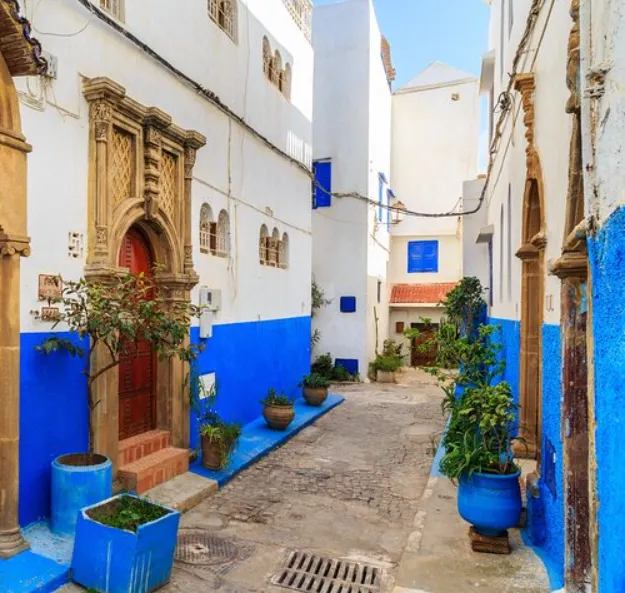
Climbing up from the gardens, we entered a maze of narrow streets flanked by charming blue and white buildings. The kasbah, free to visit, was a highlight of our time in Rabat. We enjoyed getting lost in its alleys and catching glimpses of the city below through small openings between the buildings. At the top of the kasbah, we found a large square offering stunning views of the Atlantic Ocean and the neighboring city of Salé. The sunset here was one of the most breathtaking we saw in Morocco.
The Iconic Hassan Tower and Mausoleum of Mohammed V
A short walk from the kasbah, along the Bou Regreg River, brought us to Rabat’s most famous landmark—the Hassan Tower. This 12th-century minaret, originally part of a mosque intended to be the tallest in the world, still stands at 144 feet. While the mosque was never completed due to the death of the Caliph, the columns and parts of the walls remain, offering a glimpse into the city’s ancient past.
Adjacent to the Hassan Tower is the Mausoleum of Mohammed V, the tomb of Morocco’s former king and his two sons. The mausoleum is small but exquisitely decorated, and the royal guards standing watch add to its historical significance. Though non-Muslims can’t enter the mosque next to the mausoleum, its impressive doors and intricate walls are a sight in themselves, making it a perfect spot for photos. We recommend visiting in the early morning or at sunset to experience the site bathed in beautiful light.
Is Rabat Worth Visiting?
After spending time in Rabat, we can confidently say that it is a severely underrated destination. The city’s combination of centuries-old history, delicious and affordable food, and peaceful atmosphere made it one of the most memorable stops on our Moroccan journey.
We loved wandering through the quiet streets, taking in the sights of the medina, strolling by the river, and enjoying the sunset from the Kasbah of the Oudayas. While Rabat might not have the same fast-paced energy as Marrakech or Casablanca, it’s an incredibly charming place that’s definitely worth a visit.
Rabat is also well-connected, making it an ideal starting point for exploring the rest of Morocco. If you’re considering whether to include Morocco’s capital in your travel plans, we wholeheartedly recommend it—you might just find it as captivating as we did.