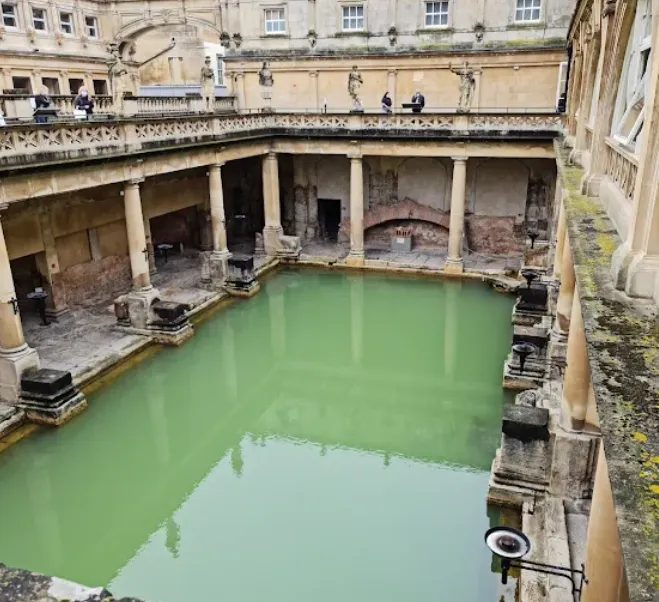
Exploring the Roman Baths in Bath, England: A Timeless Experience
Last summer, Abby and I had the chance to spend a couple of days in Bath, England, and one of the highlights of our visit was exploring the ancient Roman Baths. This was part of a broader European adventure, and after Matt and Jake headed back home, we flew into Bristol for an extended stay in England.
Bath, with its rich history and charm, has a magical quality, especially when explored on foot. The city’s compact layout makes it easy to navigate, and we stayed at the luxurious Gainsborough Bath Spa Hotel. Our time was spent sampling local restaurants and soaking in the beauty of the town’s historic architecture.
Getting Ready to Visit the Roman Baths
The Roman Baths are located right in the heart of Bath, with easy access from many of the city’s hotels. Whether you’re staying near the riverbend or closer to Bath Abbey, everything is within walking distance. We loved the Gainsborough Bath Spa Hotel, but for families, the Hotel Indigo Bath is a great option, offering spacious rooms perfect for those traveling with kids.
If you’re planning to explore the area, it’s worth considering a stay near the Roman Baths for the best walkability, especially if you’re arriving by train. The city is easy to explore on foot, and having accommodations nearby allows you to make the most of your time.
Roman Baths Tickets and Tours
Ticket prices for the Roman Baths can fluctuate depending on the time of year, with weekends and holidays generally being more expensive. It’s best to buy your tickets in advance to avoid long lines, especially during peak seasons. Additionally, purchasing tickets ahead of time helps you plan your visit around the attractions you want to see.
For an enhanced experience, consider booking a guided tour. Many tours offer an in-depth look at the history of the baths, with options for both private and group tours. A guided walk around Bath, combined with a tour of the Roman Baths, is an excellent way to make the most of your visit.
The nearby Bath World Heritage Center is also worth stopping by. It’s a small, informative spot that gives great context to the area, helping you understand the significance of the hot springs.
The Roman Baths: History and Highlights
The Roman Baths are one of the most fascinating historical sites in England. These ancient structures date back to the Roman occupation of Britain and were originally constructed around 70 AD. The complex includes the Sacred Spring, the Temple of Sulis-Minerva, and the Roman Bath House, all of which offer insight into the architectural and cultural significance of the site.
The Roman Baths were not just a place to bathe; they were a hub for social and religious activity. The sacred spring, in particular, was central to the Romans’ belief system, and it still flows today, providing the hot water that gave the baths their name.
One of the most impressive aspects of the Roman Baths is the Great Bath itself. This massive pool, which measures about 24 meters by 12 meters, was once surrounded by marble pavement and columns, providing a stunning setting for bathers. The water in the pool comes from the natural hot spring, which has been supplying the baths for thousands of years.
The Museum and Its Fascinating Artifacts
The Roman Baths Museum, located beneath the complex, offers a detailed look at the site’s history. The museum houses numerous artifacts, including lead curse tablets—small inscriptions from the Roman era, often written to invoke supernatural forces against enemies. Among the highlights are the head of the Gorgon, found at the Temple of Sulis-Minerva, and a beautiful gold-covered bronze statue of the goddess Minerva.
The museum also explains the layout of the baths, which consisted of three main rooms: the frigidarium (cold room), the tepidarium (warm room), and the caldarium (hot room). These rooms were part of a sophisticated system of baths that were central to Roman life.
Why Are the Roman Baths So Hot?
One of the most intriguing aspects of the Roman Baths is their geothermal origin. Bath sits at the foot of the Mendip Hills, where rainwater seeps deep into the earth, reaching temperatures of up to 204°F (96°C). This water travels through layers of rock, picking up minerals along the way, before being forced to the surface through natural faults in the earth.
The water flows into the baths at a temperature of around 114°F (45°C) and is rich in minerals such as calcium, sodium, and magnesium. This geothermal process has been in place for thousands of years, and it continues to provide the hot water that makes the Roman Baths such a unique and popular attraction.
A Brief History of the Roman Baths
The Roman Baths have a rich and varied history that spans over two millennia. Before the Romans arrived in Britain, the area was already known for its hot springs, and early Celtic tribes likely used the waters for religious and healing purposes.
When the Romans invaded Britain in the 1st century AD, they built a temple dedicated to the goddess Sulis-Minerva and began constructing the bath complex. The Romans were skilled engineers, and the bathhouse they built was a marvel of ancient engineering. They created a sophisticated system for heating the water and maintaining the baths, and they incorporated local beliefs into the design, naming the town Aquae Sulis (“the waters of Sulis”).
After the Romans left Britain in the 5th century, the baths fell into disrepair, but they were rediscovered and revived in the 12th century. Over the centuries, the baths were expanded and renovated, and their reputation as a place of healing continued to grow.
The Roman Baths Today
In modern times, the Roman Baths have become one of the most popular tourist attractions in England, drawing visitors from all over the world. Bath itself is a UNESCO World Heritage Site, recognized for its well-preserved Roman ruins, Georgian architecture, and historical significance.
Today, visitors can explore the ancient Roman Baths and learn about their fascinating history. The Great Pump Room, built in the 18th century, serves as a fine-dining restaurant and offers an opportunity to enjoy afternoon tea or a meal while taking in the historic surroundings.
Conclusion
A visit to the Roman Baths in Bath is a journey through history, offering a glimpse into the past and a chance to experience one of the most impressive Roman sites in the world. Whether you’re drawn to the fascinating engineering behind the baths or the beauty of the natural hot springs, there’s something for everyone to enjoy. Bath is a city where history comes alive, and the Roman Baths are at the heart of it all.