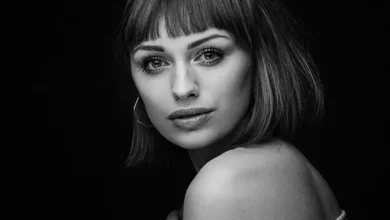
Essential Portrait Posing Tips for Women: Achieve Stunning Shots
Creating beautiful and flattering portraits requires more than just a camera and good lighting. The way your subject poses plays a crucial role in capturing their best features. In this post, I’ll share some essential posing tips for women, focusing on body posture, hand placement, and angles to elevate your portrait photography game.
Full-Length Posing Tips for Women
When guiding a female model, the most important rule to remember is:
If it bends, bend it!
What this means is that you should encourage your subject to bend their joints—whether it’s their arms, legs, or torso. Straight limbs make the subject appear stiff and unnatural, which can ruin an otherwise great shot.
For example, let’s take a look at how a simple change can dramatically improve a pose. In one pose, a woman stands stiffly with both feet evenly weighted, arms awkwardly clasped, and her body facing straight ahead. This makes her appear wide and rigid. A slight shift in weight to one leg and turning her body slightly to the side can already create a much more flattering shape.
By positioning her hands on her hips, we introduce some bend and create a slimming triangle between the body and arms. Additionally, her feet and hip placement add dimension, further enhancing the pose. Remember, avoid having the front hip directly facing the camera, as this can make the subject’s bottom appear larger than it is.
Seated Posing Tips for Women
Seated poses follow similar principles:
- Bend at the joints.
- Push the hip away from the camera.
- Create space between the arms and body.
In a poor seated pose, the model’s body may appear stiff with arms and legs positioned straight, which doesn’t add any movement to the shot. However, by making small adjustments like having the model’s arms reach away from her body, and rotating the knees or shoulders slightly, the pose becomes much more dynamic.
Also, avoid having the model lean back too much; instead, ask her to sit up straight or lean forward slightly. This helps to elongate the neck and minimize the appearance of a double chin.
A little attention to detail can make a huge difference in posture, so be mindful of subtle changes like slight turns in the head or body, and avoid using too much weight on one arm, as this can distort the pose and make the model appear unnaturally posed.
Tips for Headshots
Headshots may seem like an easier task, but they require just as much attention to detail. The positioning of the body—especially the feet and knees—affects the posture of the shoulders and head. For a well-composed headshot, start by adjusting the lower body. A small shift in the knees or feet can help create the desired angle in the shoulders.
For an improved headshot, try turning the body slightly away from the camera and ask the subject to turn their head toward the lens. This angle is often more flattering as it narrows the face, highlights cheekbones, and provides more dimension. A slight tilt of the head, as well as adjusting the camera angle to eye level or slightly above, will further enhance the subject’s appearance.
A crucial point to keep in mind: never angle the face and shoulders in the same direction. This can make the pose look flat and less engaging. A subtle tilt in either the shoulders or head helps create more interest in the composition.
Posing for Profile Portraits
When taking profile portraits, you’ll want to keep certain things in mind to ensure the subject looks their best. If the model has a side part in their hair, ensure that the part aligns with the direction of the profile shot. Avoid photographing the opposite side, as this can make the hair look messy and the lighting less flattering.
Also, remember that in profile shots, the face should not be aligned with the shoulders. The shoulders should face slightly toward the camera, creating a more dynamic composition. This is especially important when capturing close-up portraits, where small adjustments can significantly alter the outcome.
Posing Hands for Women
Hand positioning is a critical but often overlooked detail in portrait photography. Avoid showing the flat back of the hand or a clenched fist, as these can appear too harsh. Instead, have the subject gently curve their fingers or rest them lightly in the frame, creating a softer and more feminine look.
If the subject is using their hands to prop up their face or arms, ensure there is no excessive weight placed on them, as this can distort the face. The goal is to make the hands appear relaxed, with natural curves that enhance the overall aesthetic.
If you’re struggling with hand positioning, try mimicking the pose yourself or have your subject mirror you. This helps them relax and adds a more natural flow to the pose.
Conclusion
Posing is an essential skill that can make or break a portrait. By applying these simple tips, you can create flattering, dynamic images that capture the best features of your subject. Remember, the key is to focus on creating natural bends and angles, paying attention to the background, and adjusting small details like the tilt of the head and hand positioning. With practice, you’ll be able to guide your subjects into poses that feel natural and produce beautiful results every time.