A Complete Guide to Batu Caves: Kuala Lumpur’s Iconic Shrine
Kuala Lumpur, a city that seamlessly blends modern skyscrapers with ancient traditions, offers an unforgettable experience for travelers. One of its most iconic landmarks is Batu Caves, a vast complex of Hindu temples and shrines nestled within a towering limestone hill. Just a short distance from the heart of the city, this sacred site holds a special place in the hearts of both locals and visitors alike. Whether you’re there to explore the temples or simply take in the stunning views, Batu Caves is a destination you don’t want to miss.
Here’s everything you need to know about visiting this incredible site.
Key Information Before You Go
Free Admission
The Batu Caves complex is free to enter, which is a big draw for visitors. Some of the smaller sites inside might require a small donation or ticket for entry, but these are optional and won’t affect your overall experience.
Dress Code
As Batu Caves is a religious site, there is a dress code in place. Both men and women are required to cover their shoulders and legs. While men can wear t-shirts and shorts, women should avoid tank tops and may need to rent a sarong (though cleanliness may vary). Children are exempt from the dress code, as long as they dress modestly.
Accessibility
Unfortunately, the Batu Caves are not accessible for those with reduced mobility. The steep steps leading up to the caves and the lack of accessible facilities mean that visitors with disabilities will be limited to exploring only the main square.
How to Get There
Batu Caves is easy to reach from central Kuala Lumpur via public transport. You can take the KTM Komuter Seremban Line from KL Sentral to Batu Caves station, which takes about 45 minutes. The entrance is just a short walk from the station. If you’re closer to Masjid Jamek Station, take the same line and get off at Batu Caves.
Alternatively, taxis and ride-hailing apps like Grab can get you there, but expect to pay more for the convenience. If you’re traveling on your own, using public transport is both cost-effective and straightforward.
Best Time to Visit
To avoid the sweltering midday heat, it’s best to visit Batu Caves early in the morning. The caves open at 7:00 AM and close at 9:00 PM, so arriving early allows you to enjoy the site with fewer crowds and cooler temperatures. Additionally, early visits give you more time to explore the complex, which can take 3-4 hours.
If you’re visiting during the Thaipusam festival (usually in January or February), be prepared for large crowds and intense religious rituals. This event honors Lord Murugan, and worshippers undergo a series of physically demanding acts, such as body piercings, making it an overwhelming but fascinating experience.
What to See at Batu Caves
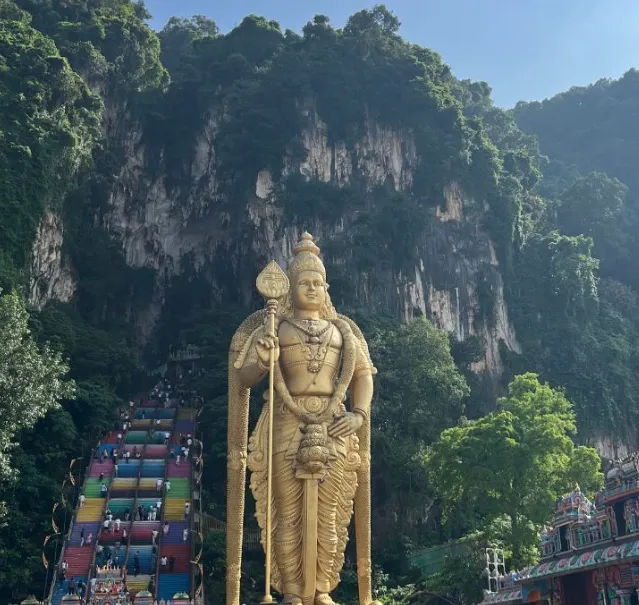
Once you enter the complex, you’ll be greeted by the stunning 272 steps leading up to the caves. Alongside the steps stands the imposing 42.7-meter-high golden statue of Lord Murugan, the Hindu god of war. It’s an impressive sight, and perfect for a photo op.
Monkeys
The Batu Caves are home to many playful monkeys that are often seen climbing the stairs and hanging around the shrines. While they can be entertaining to watch, they are not friendly and may try to snatch food or personal items. Keep your belongings secure, and avoid engaging with them.
Temple Cave
After tackling the 272 steps, you’ll reach the Temple Cave, the largest and most famous cave in the complex. Inside, you’ll find shrines adorned with colorful statues and candles. It’s a captivating mix of spirituality and everyday life, with vendors selling items and people praying in the sacred space.
Pro-Tip:
The Temple Cave is also home to many birds and bats. Be cautious of droppings as you explore, as they can fall unexpectedly from above. It’s a good idea to carry a tissue or wet wipes with you just in case.
Dark Cave
Though currently closed due to the pandemic, the Dark Cave is a fascinating part of the complex. It used to offer guided tours showcasing the unique ecosystem within the cave, including rare species of bats and insects. Keep an eye on announcements for when it might reopen.
Ramayana and Cave Villa
If you’re keen to see more, consider visiting the Ramayana Cave, which depicts the story of the Hindu epic through vibrant murals. The Cave Villa, however, is best avoided. It’s become a controversial attraction due to its poor conditions for the animals housed there. It’s a privately owned facility that has been criticized for unethical practices, so it’s best to skip it altogether.
Things to Know About Visiting Batu Caves
- Hydrate and Protect Yourself
The Batu Caves area can get very hot, especially in the middle of the day. Bring water, sunscreen, and a hat to shield yourself from the sun. The caves offer little shade, and the heat can be draining. - Avoid the Monkeys
While the monkeys can be cute, they’re also known to steal food and items from visitors. Don’t bring any snacks or open bags, and always keep your phone or camera secure with a wrist strap. - Climb the Steps
The 272 steps to the top may seem daunting, but the climb is part of the experience! Take your time and enjoy the beautiful views as you ascend.
Final Thoughts
Visiting Batu Caves is an enriching experience, offering a glimpse into Malaysia’s cultural and religious history. Whether you’re admiring the massive golden statue of Lord Murugan or exploring the intricate temples, the site provides a peaceful and awe-inspiring escape from the busy city life of Kuala Lumpur.
While the site is easily accessible and free to visit, remember to respect the dress code and be cautious of the crowds, especially during festivals. With its stunning beauty and spiritual significance, Batu Caves is truly a must-see landmark in Malaysia.