10 Tips to Enhance Your Hiking Photography
Hiking season is in full swing, and for photographers, it’s the perfect opportunity to capture stunning landscapes and moments of adventure. While hiking offers amazing photo opportunities, carrying your camera gear through challenging terrain requires a bit of strategy. Here are 10 essential tips to help you improve your hiking photography, stay organized, and fully enjoy the outdoors.
1. Capture the Journey, Not Just the Destination
While it’s tempting to save your camera for the final summit, the best moments often occur during the hike itself. Those small, candid moments—struggling up a tough trail or capturing a beautiful section of light—are what make the experience truly unique. Don’t limit yourself to just the end goal. Remember, photography is about the journey, not just the destination.
2. Bring a Tripod for Self-Portraits
If you’re hiking solo, a tripod is an invaluable tool for self-portraits. Set your camera up with a delayed shutter (10-second timer works best) and position yourself in the perfect spot. This allows you to be the photographer and model, giving you the freedom to create shots that showcase the beauty of the hike with you in them. No more wishing for someone to be in the frame!
3. Use a Camera Holster for Quick Access
A camera holster is one of the best accessories for hikers. These holsters attach to your backpack strap, keeping your camera secure and easily accessible. Instead of digging through your bag when you spot the perfect shot, a holster ensures you can quickly grab your camera and be ready in an instant.
4. Plan for Golden Hour
Golden hour—just before sunset or after sunrise—offers the best lighting for your photos. The soft, warm light adds depth and beauty to any scene. Plan your hike so you arrive at your destination during these magical times. Use apps like The Photographer’s Ephemeris or PhotoPills to check golden hour times, ensuring you don’t miss out on the best light.
5. Camp Out for Extended Shooting Opportunities
To truly maximize your photography, consider spending the night outdoors. Camping in the backcountry gives you the chance to capture both sunset and sunrise shots from an epic viewpoint. You’ll also have more time to explore and photograph hidden gems that you might miss on a day hike.
6. Include a Person for Scale
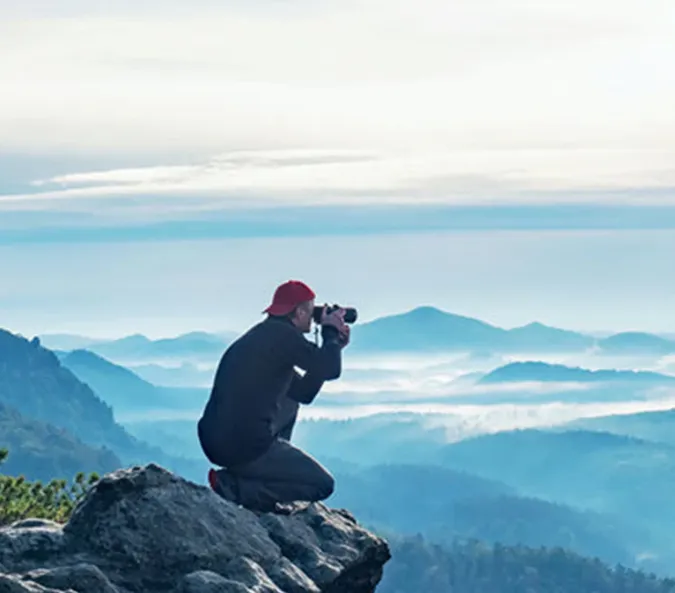
Sometimes it’s hard to capture the vastness of nature in photos. Including a person in the frame provides a sense of scale and helps convey the true size of your surroundings. Have a friend or fellow hiker stand in a spot that contrasts with the landscape—against a clear sky or distant mountains—so they stand out and highlight the size of the environment.
7. Pack Light, But Smart
Hiking with camera gear can be heavy and cumbersome, so it’s essential to be selective about what you bring. Instead of packing every lens you own, choose one versatile lens and an additional one to cover any potential gaps. A wide-angle lens and a telephoto lens are great choices to give you flexibility without overloading your pack.
8. Seek Out Wildflowers
Wildflowers are a fantastic way to add vibrant color to your hiking photos. Whether you’re focusing on the flowers themselves or incorporating them into a larger landscape, they can bring an extra pop of color to your images. Early to mid-summer is the best time to capture wildflowers, and you’ll find many different varieties depending on where you hike.
9. Challenge Yourself to Explore New Trails
If you want your photos to stand out, sometimes you need to go off the beaten path. Don’t settle for the well-trodden trails that everyone else has already photographed. Use topographical maps to discover less-traveled routes and new locations that offer fresh perspectives. The further you venture, the more unique your photos will be.
10. Be Present and Enjoy the Moment
While it’s tempting to focus on capturing the perfect shot, it’s important to enjoy the hike itself. Some of the best photos happen when you’re not looking for them. When you’re present and mindful, you’ll notice small details and find unique compositions that others might overlook. Let the experience shape your photography, and you’ll come back with more than just great photos—you’ll have lasting memories of your adventure.
Conclusion
With these 10 tips, you’ll be well on your way to capturing stunning hiking photos that reflect both the beauty of nature and your personal experience. Whether you’re trekking up a mountain or wandering through a meadow, the key is to embrace the adventure and let your camera follow your journey.